FORM. TEXTURE. CHARACTER.01 / MATERIAL
COSTUMES & CLOTHING / JPEG · PDF COLLECTION
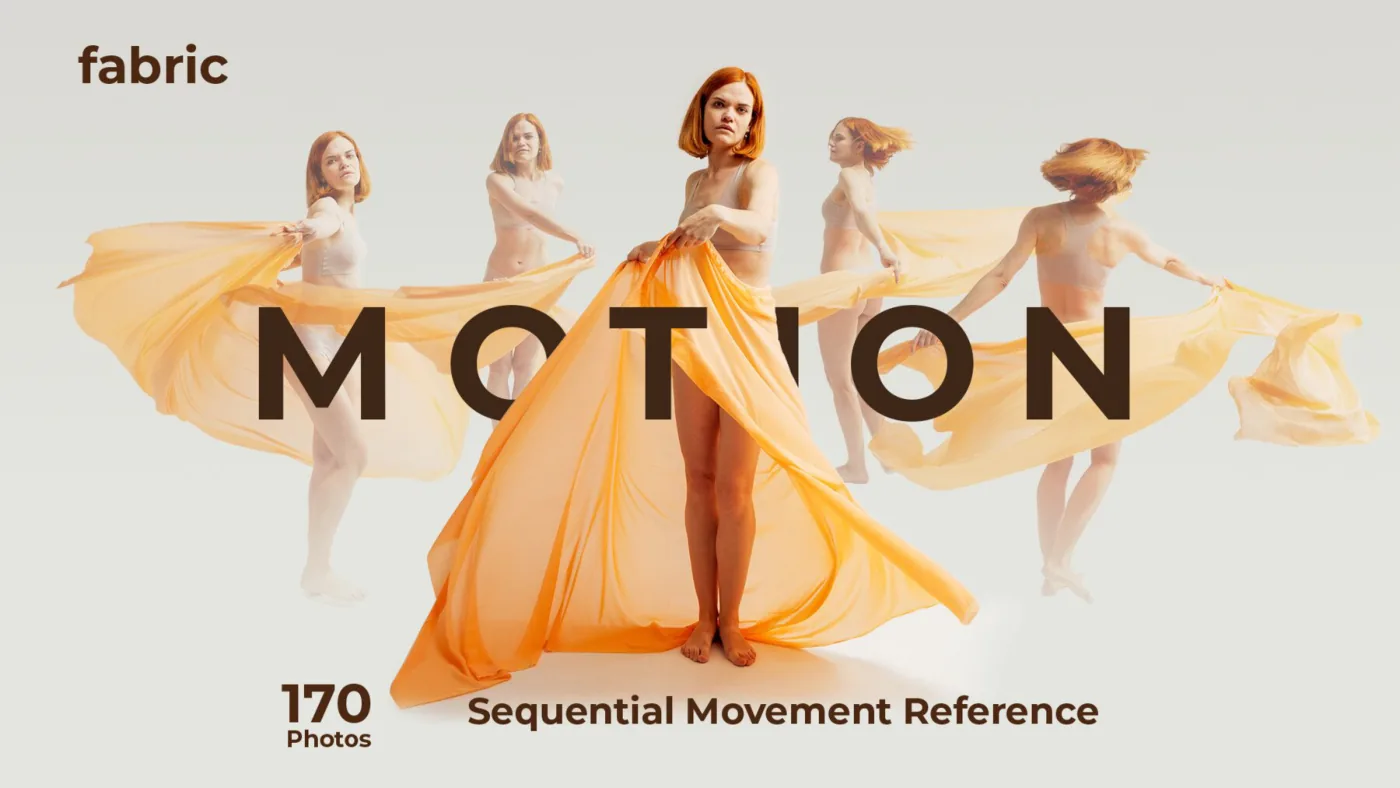
Fabric in Motion — 170 Reference Pictures of Flowing Cloth
Costumes & Clothing
JPEG / PDF · Photoshop · Krita
EXPLORE EVERY DETAIL02 / PREVIEWS
Collection cover
Select an image to explore the details ↗12 COLLECTION PREVIEWSJPEG / PDF
COLLECTION DOCUMENT171 PAGES
BEYOND THE SURFACE03 / ABOUT
CONTENTS / POSSIBILITIES / DETAILS
INSIDE THE MATERIAL.
One length of cloth, caught mid-move
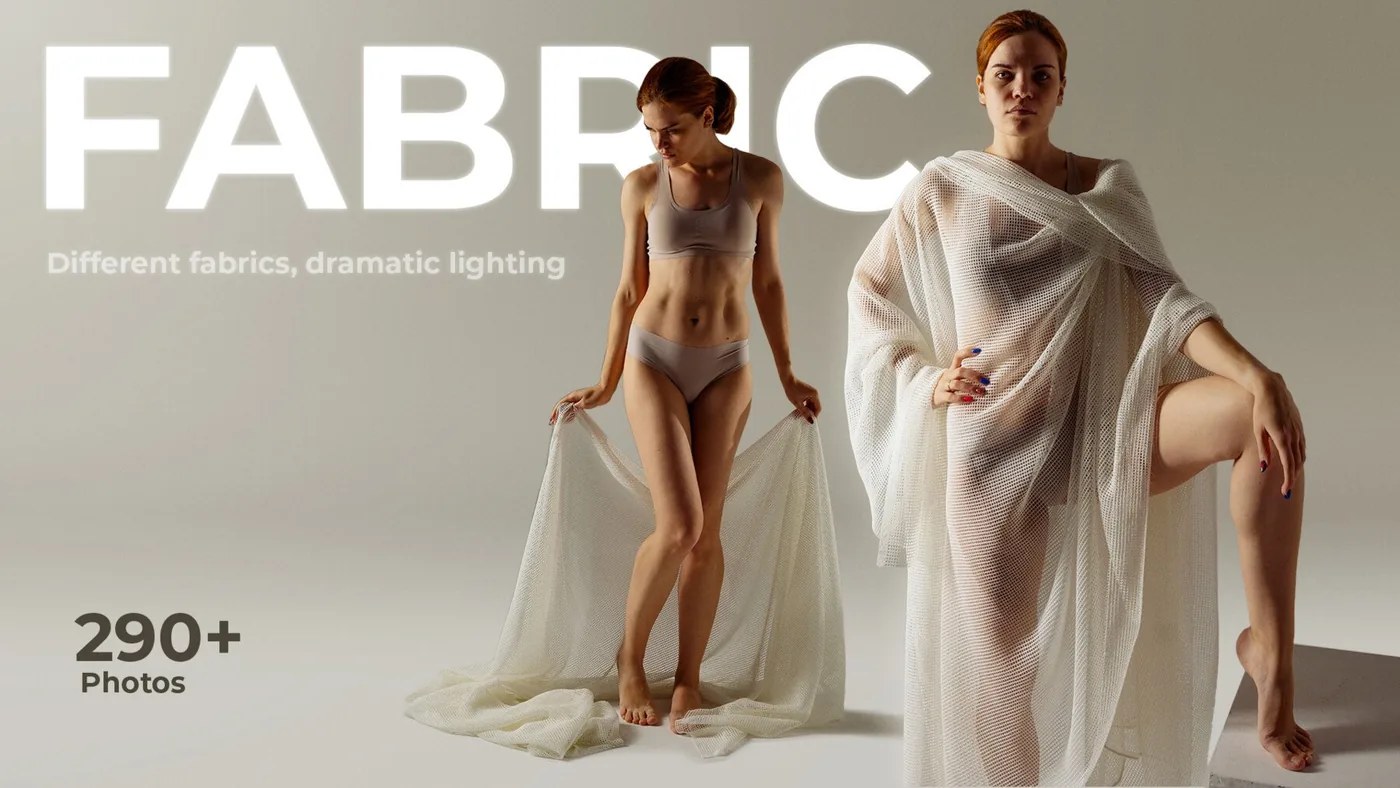
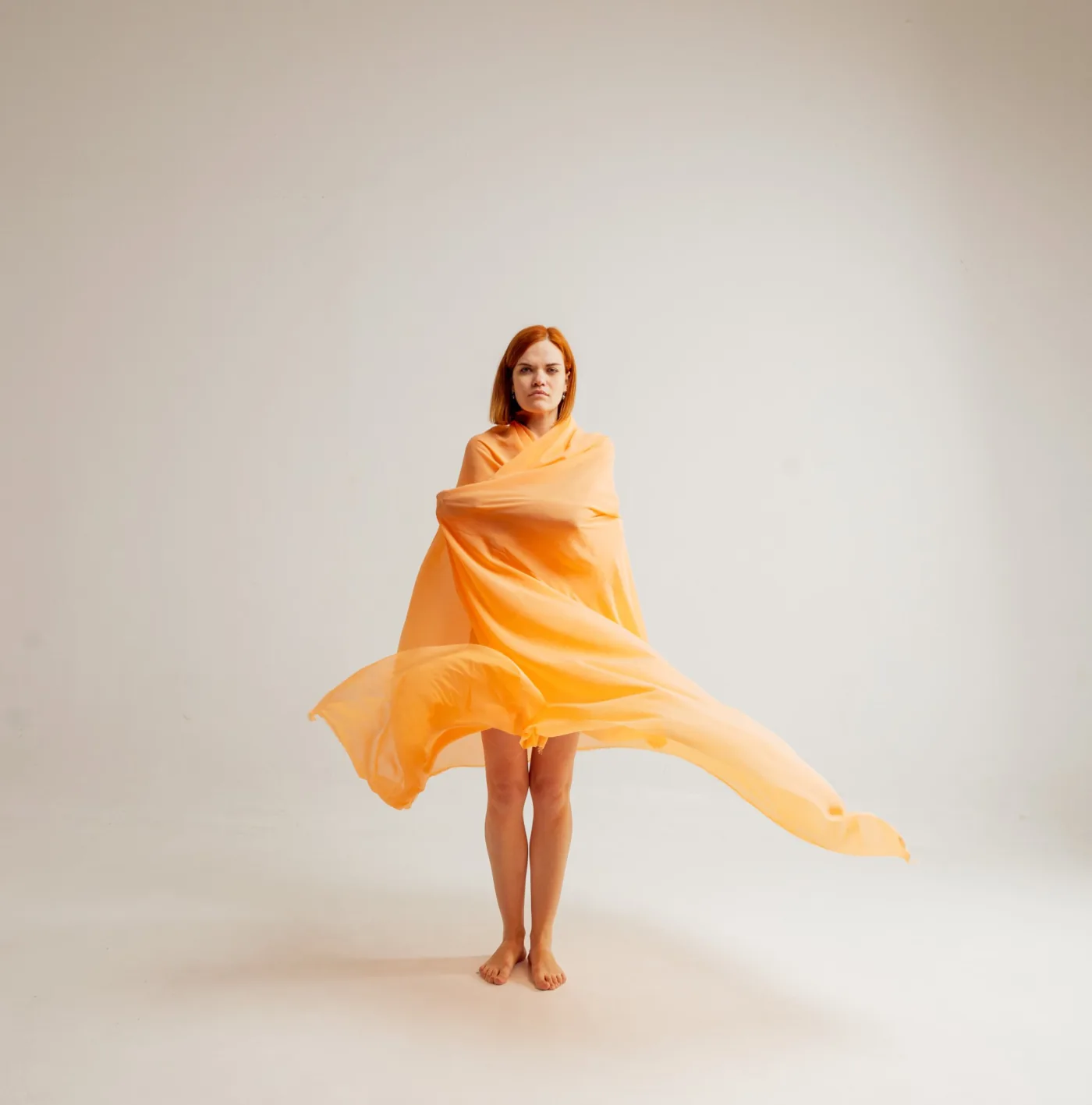
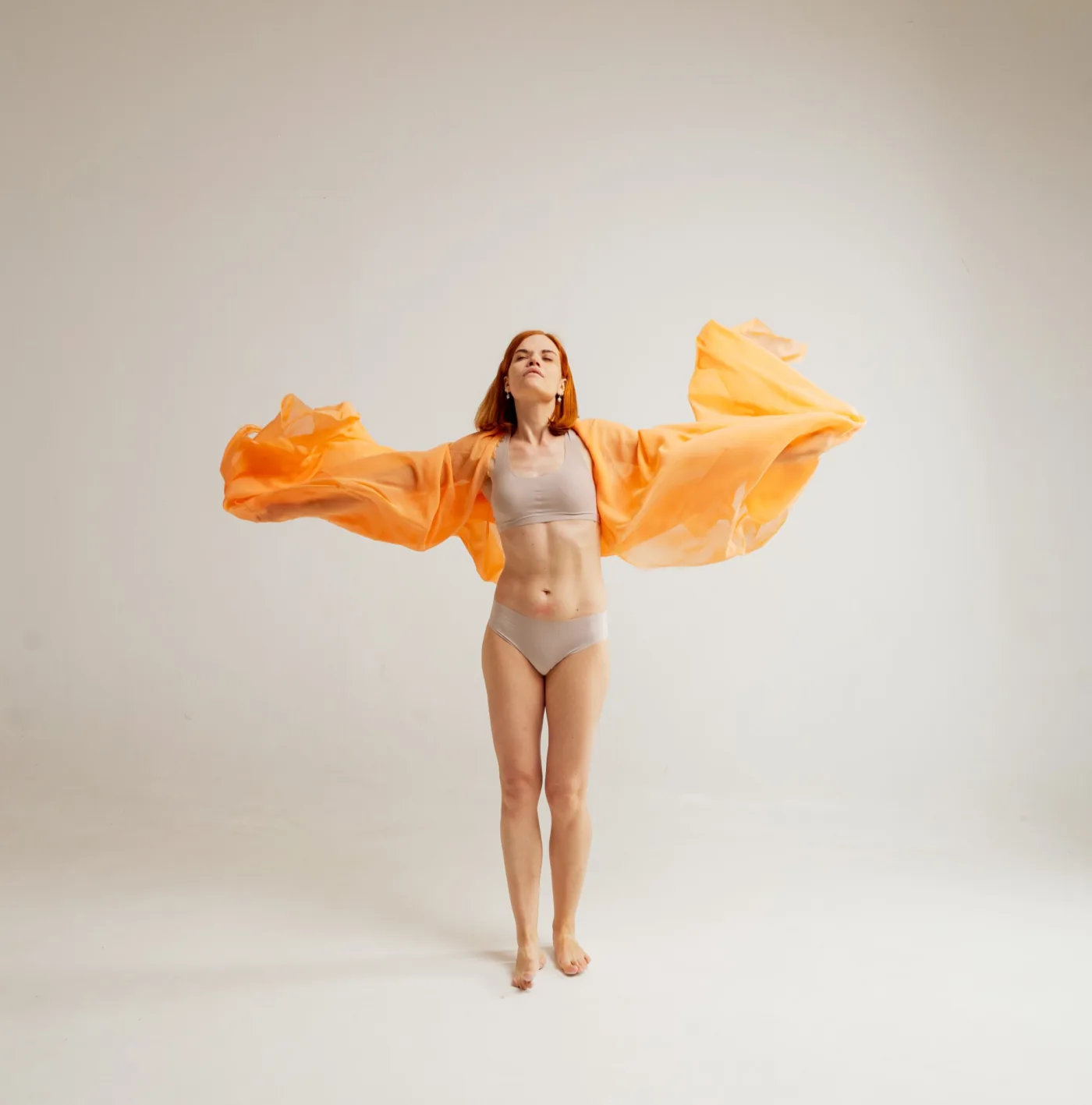
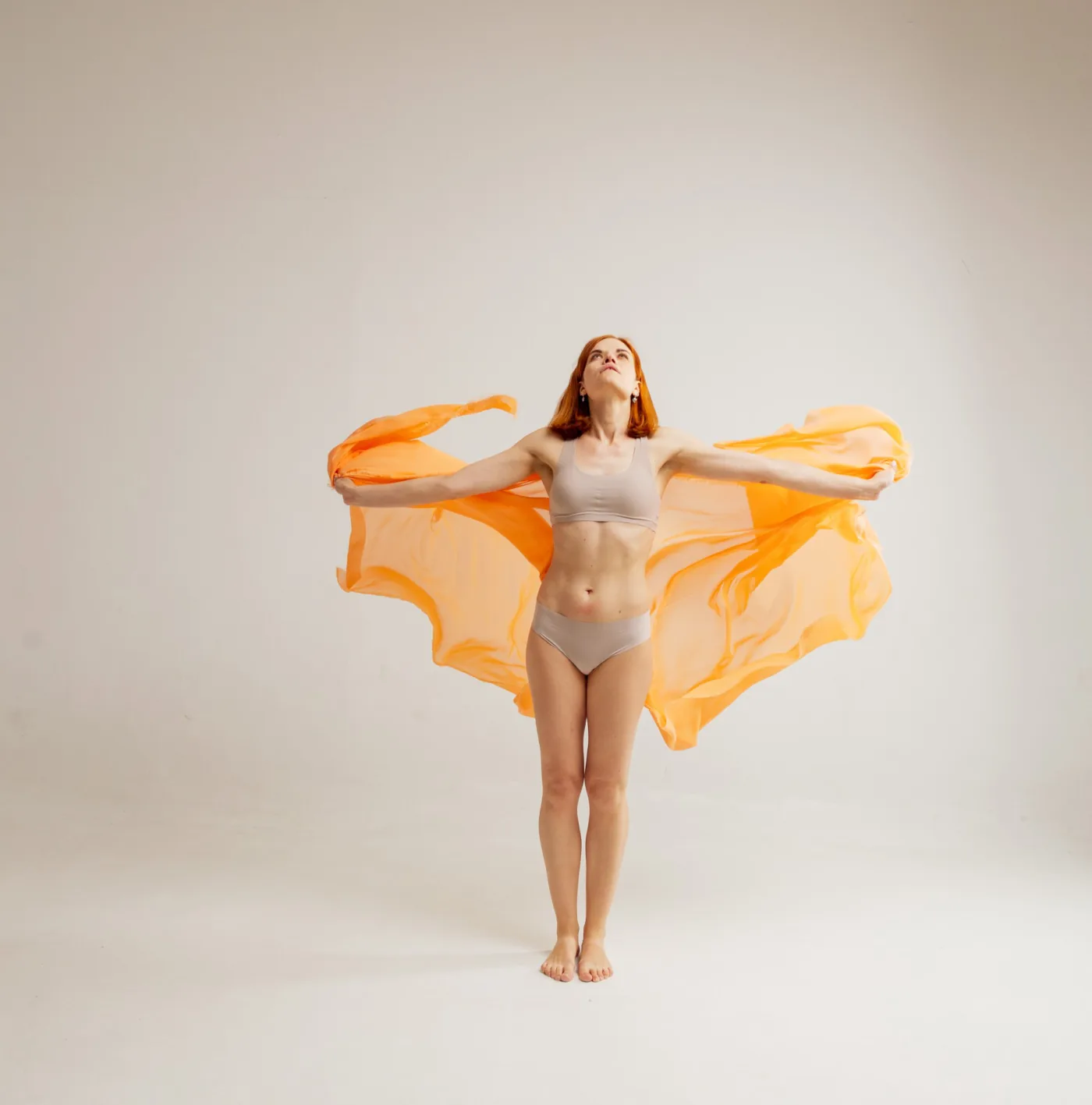
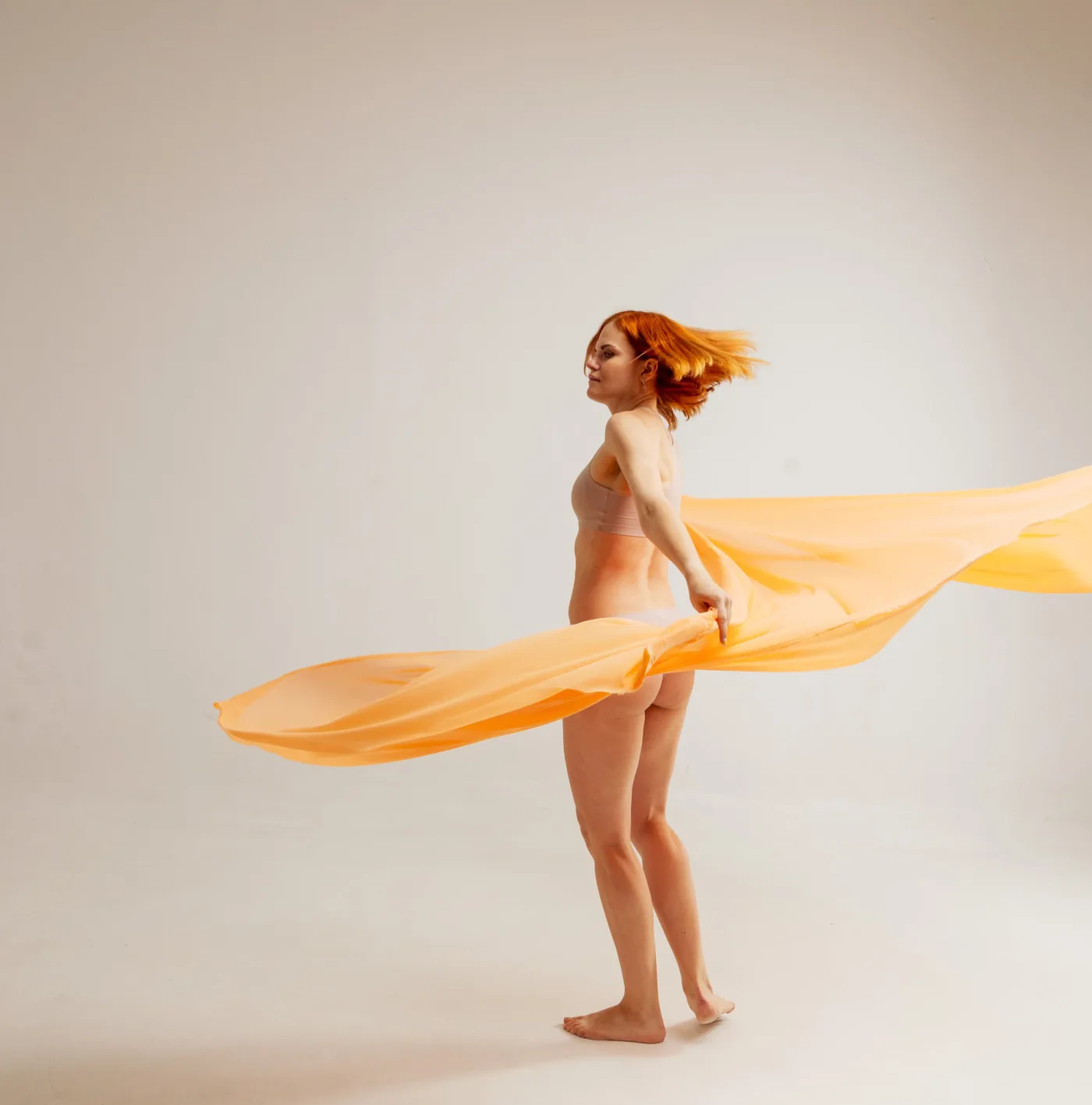
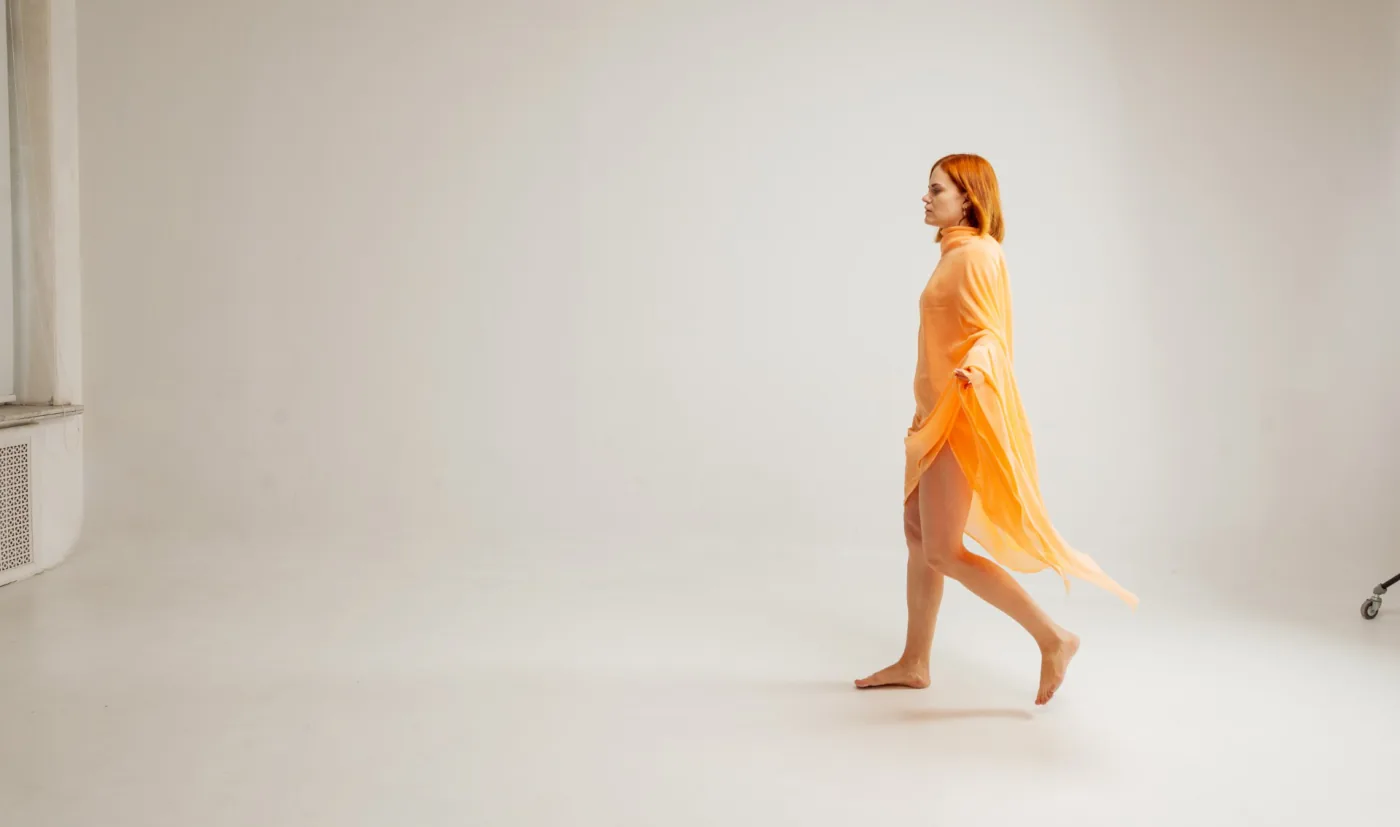
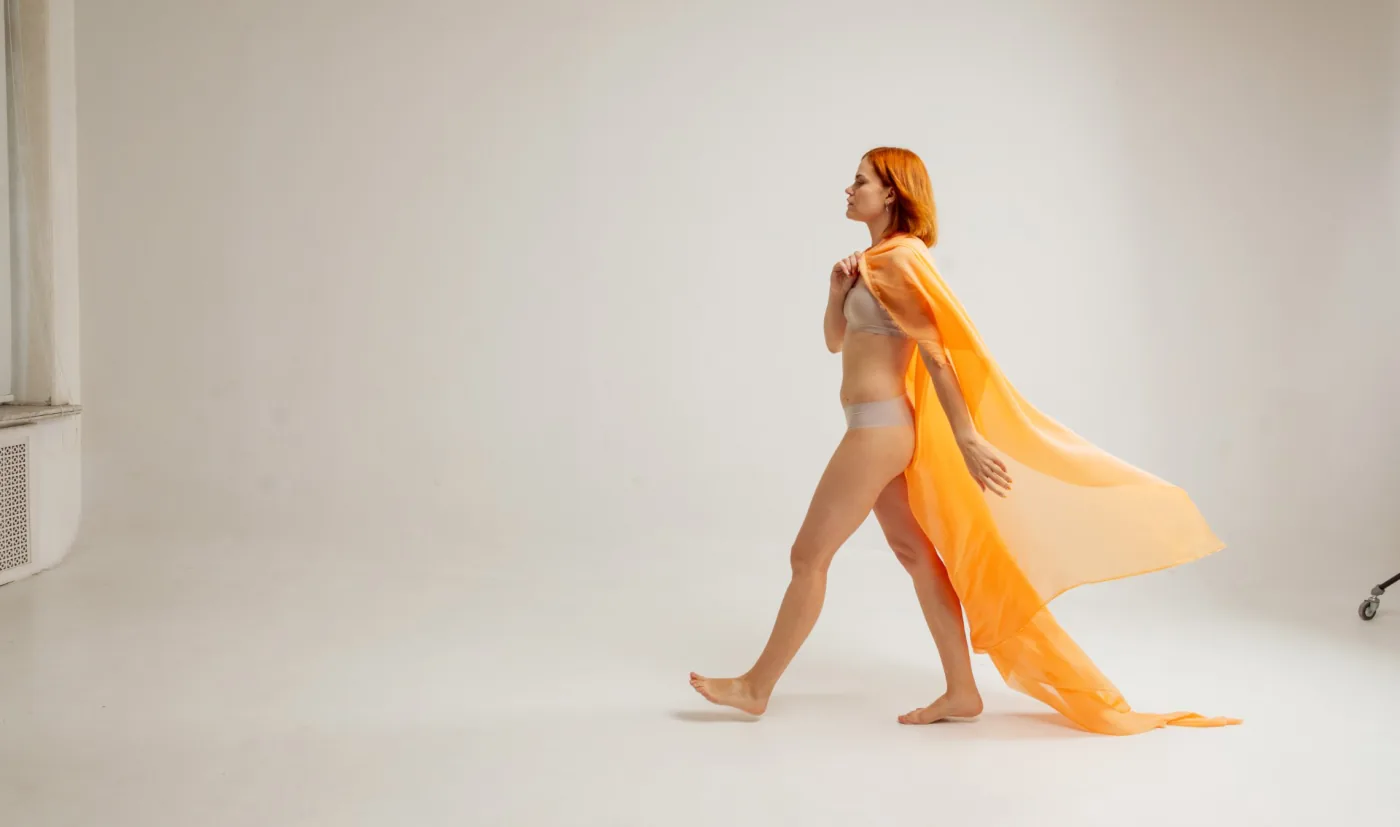
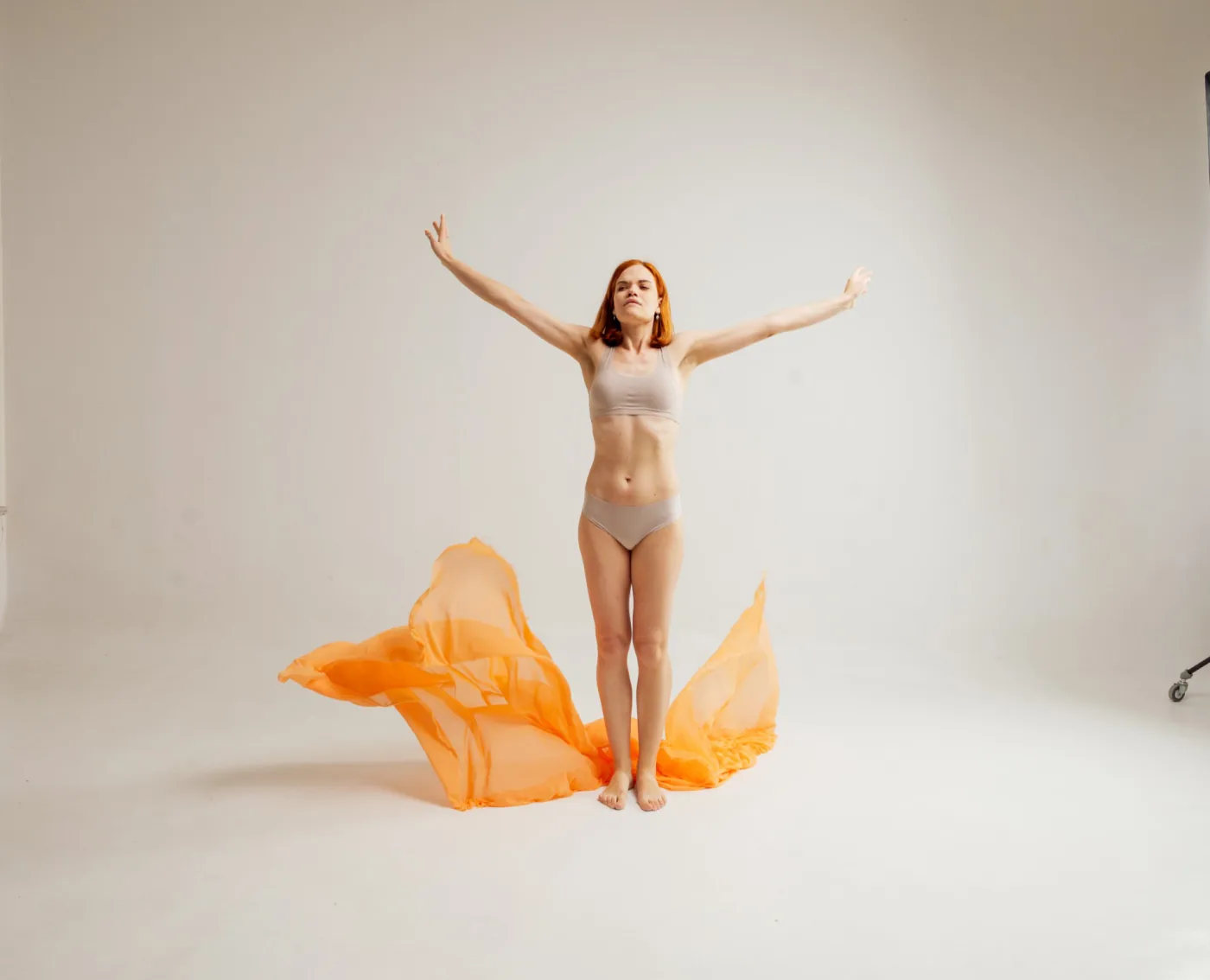
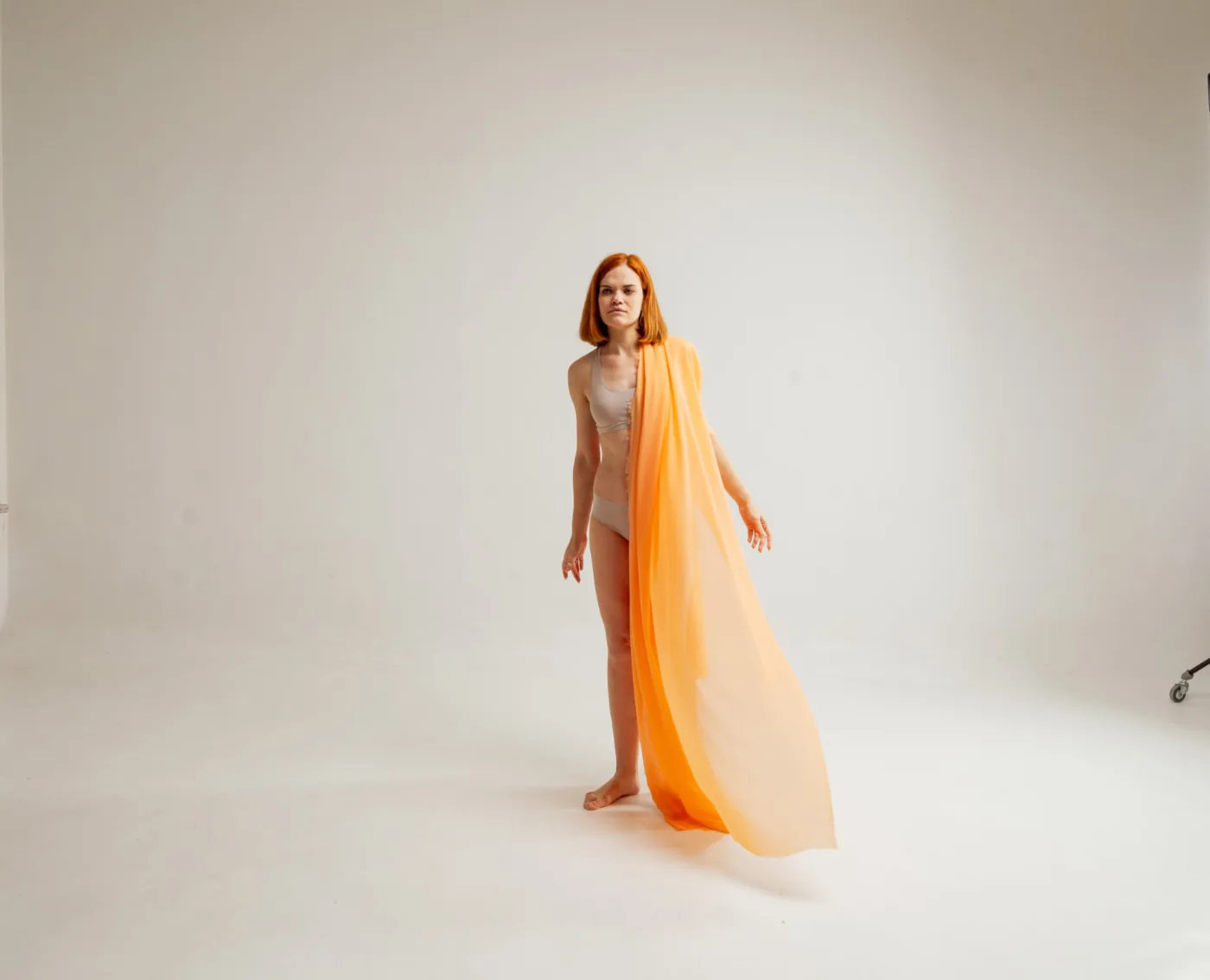
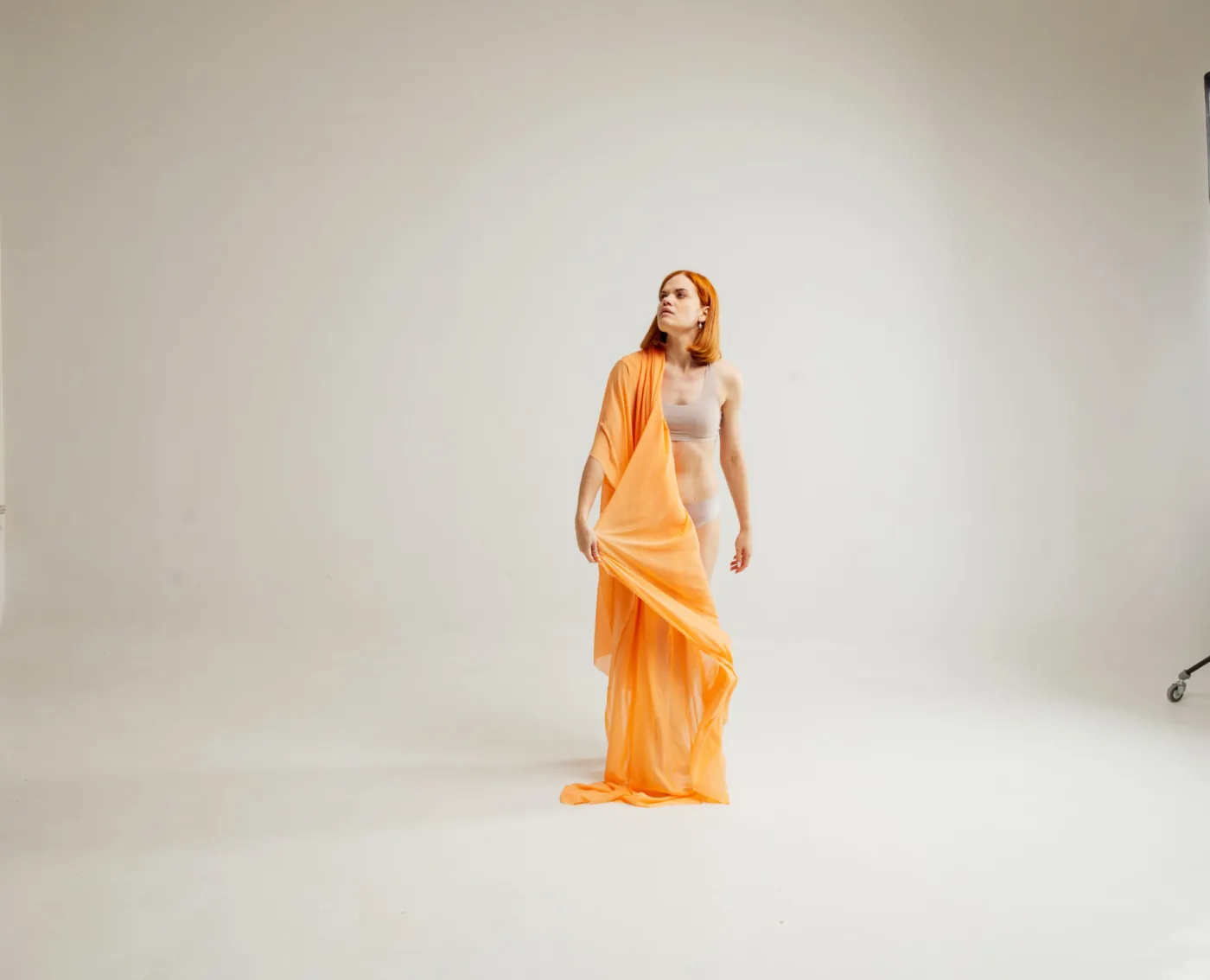
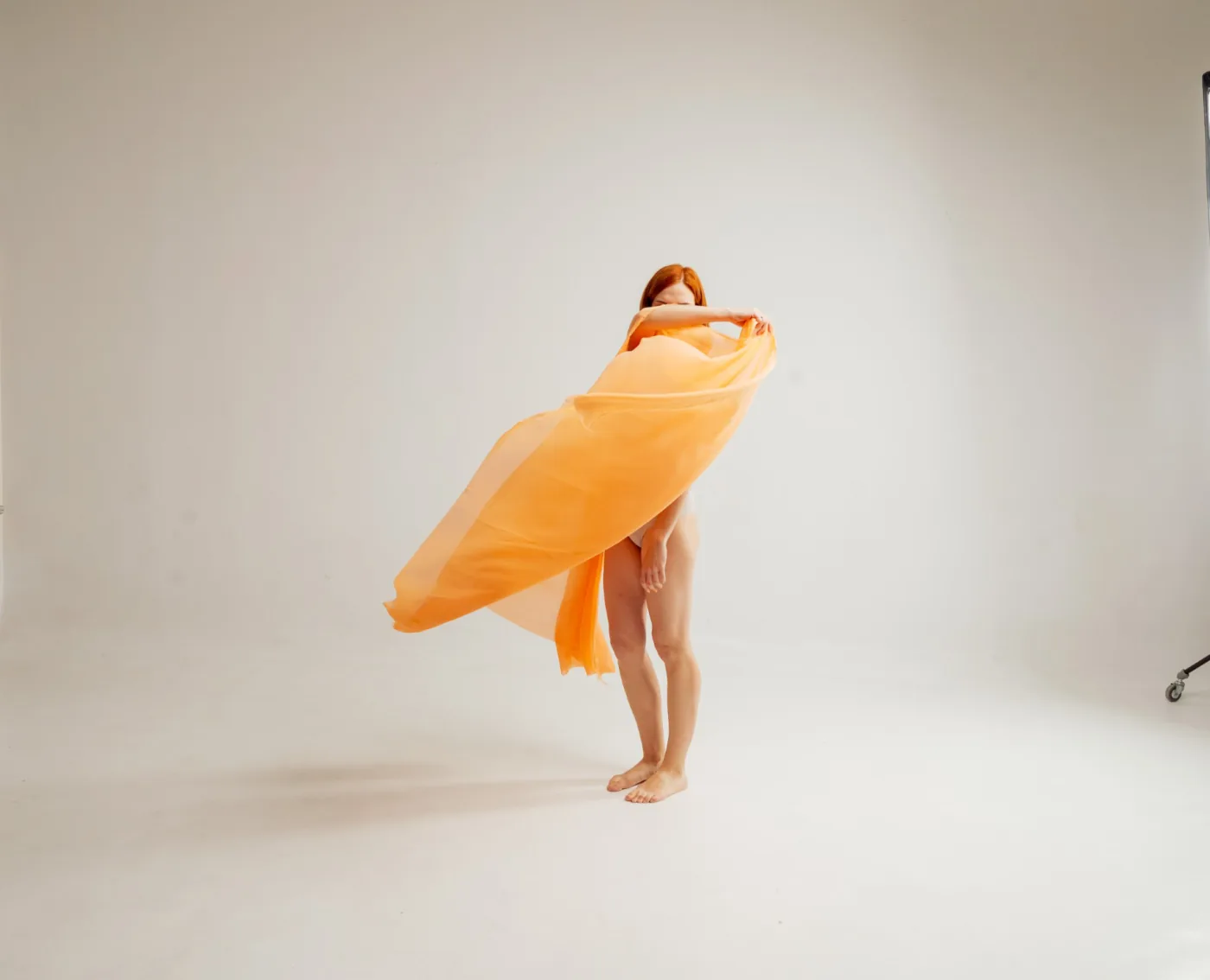
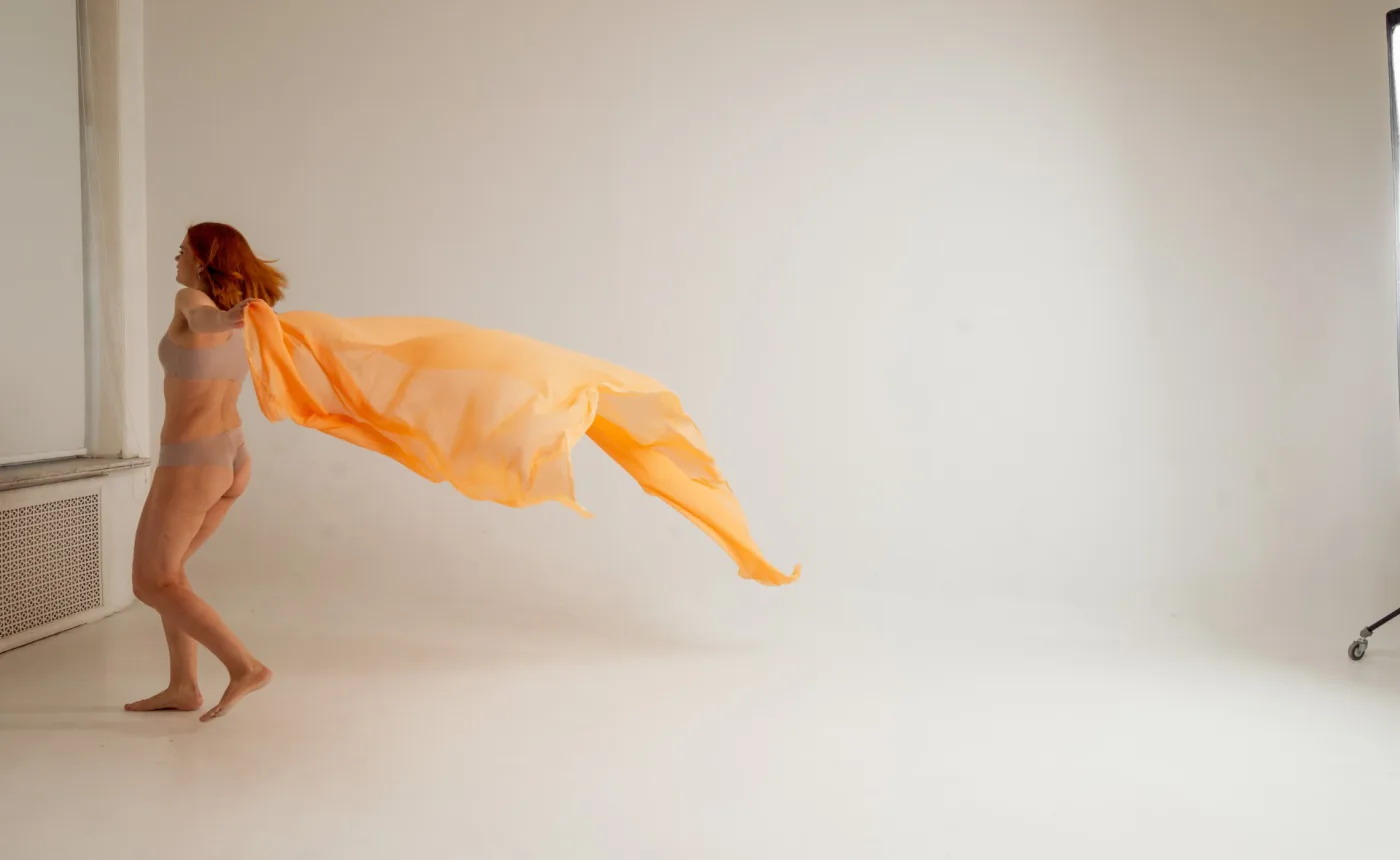
The set is built around a single studio idea: a model in beige underwear works a long piece of sheer orange fabric against a warm white wall, and the camera follows the cloth rather than the pose. The frames run as a sequence — the fabric is gathered, lifted overhead, thrown across the body and allowed to settle.
Because the fabric is translucent, every frame carries two layers of information: the shape of the folds and the body visible through them. The red bob, bare feet and plain background keep the sequence readable as movement rather than fashion.
170 photographs and a 171-page PDF
170 JPEG originals, 73 portrait / 97 landscape, at up to 5,394 px on the long edge. The publisher's 171-page PDF repeats the sequence one frame per page.
The archive keeps the publisher JPEGs only; the PDF is delivered separately. The twelve previews on this page are an even selection, not the full sequence.
Read the fold before the figure
Use the early frames to establish the volume of the cloth — where it bunches at the shoulder, where it pulls into long diagonal tension lines, where the hem trails. Then follow the later frames for the way a throw changes the silhouette in one or two beats.
Suitable for drapery and costume studies, animation and storyboard timing, digital painting in Photoshop, Krita or Procreate, and cloth simulation reference in Blender or Marvelous Designer.
CONTINUE THE COMPOSITION04 / RELATED
A FEW MORE IDEAS