FORM. TEXTURE. CHARACTER.01 / MATERIAL
ART BOOKS / PDF COLLECTION
Scorn: The Art of the Game
Matthew Pellett
Titan Books · 2022
EXPLORE EVERY DETAIL02 / PREVIEWS
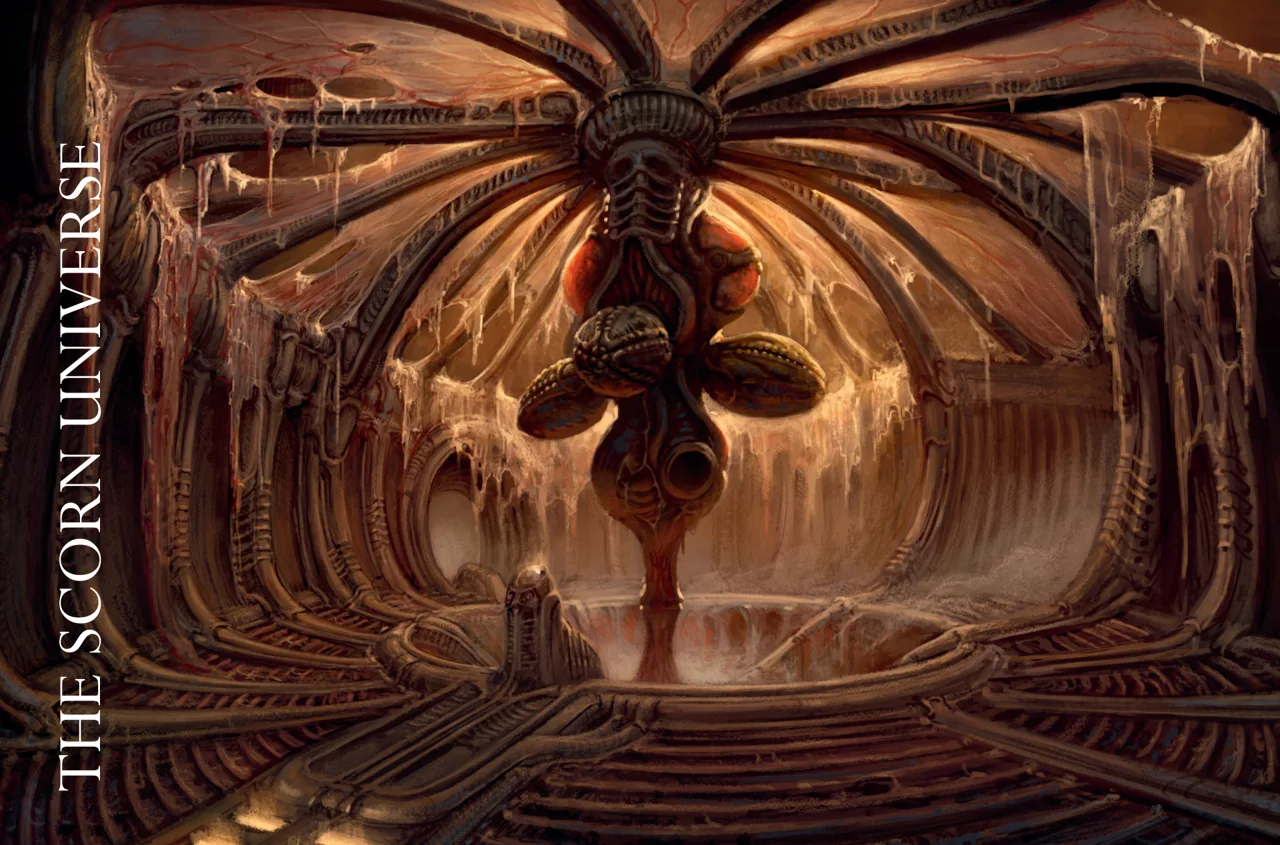
The Scorn Universe · pp. 22–23 · PDF sheet 12
Select an image to explore the details ↗06 COLLECTION PREVIEWSPDF
INSIDE THE EDITION97 PDF SHEETS
BEYOND THE SURFACE03 / ABOUT
CONTENTS / POSSIBILITIES / DETAILS
INSIDE THE MATERIAL.
A world without familiar boundaries
What makes a space feel constructed and alive at the same time? Scorn asks us to read its walls, passages and mechanisms as parts of a single system. Matthew Pellett’s art book creates room for a slower encounter: pausing on an image, looking back at a neighbouring spread, and noticing relationships that are easy to miss in motion.
The contents move through the protagonist, locations, inhabitants, weapons and interfaces before turning to logo variations, promotional images, trailers and storyboards. This arrangement connects different scales of visual development, from the shape of an entire environment to an object a character might touch.
Our selection focuses on environments. Across these spreads, recurring arches, ribs and cavities form a shared vocabulary for interiors and landscapes. The following is an editorial reading of their composition, intended to support observation and independent work.
Rhythm before ornament
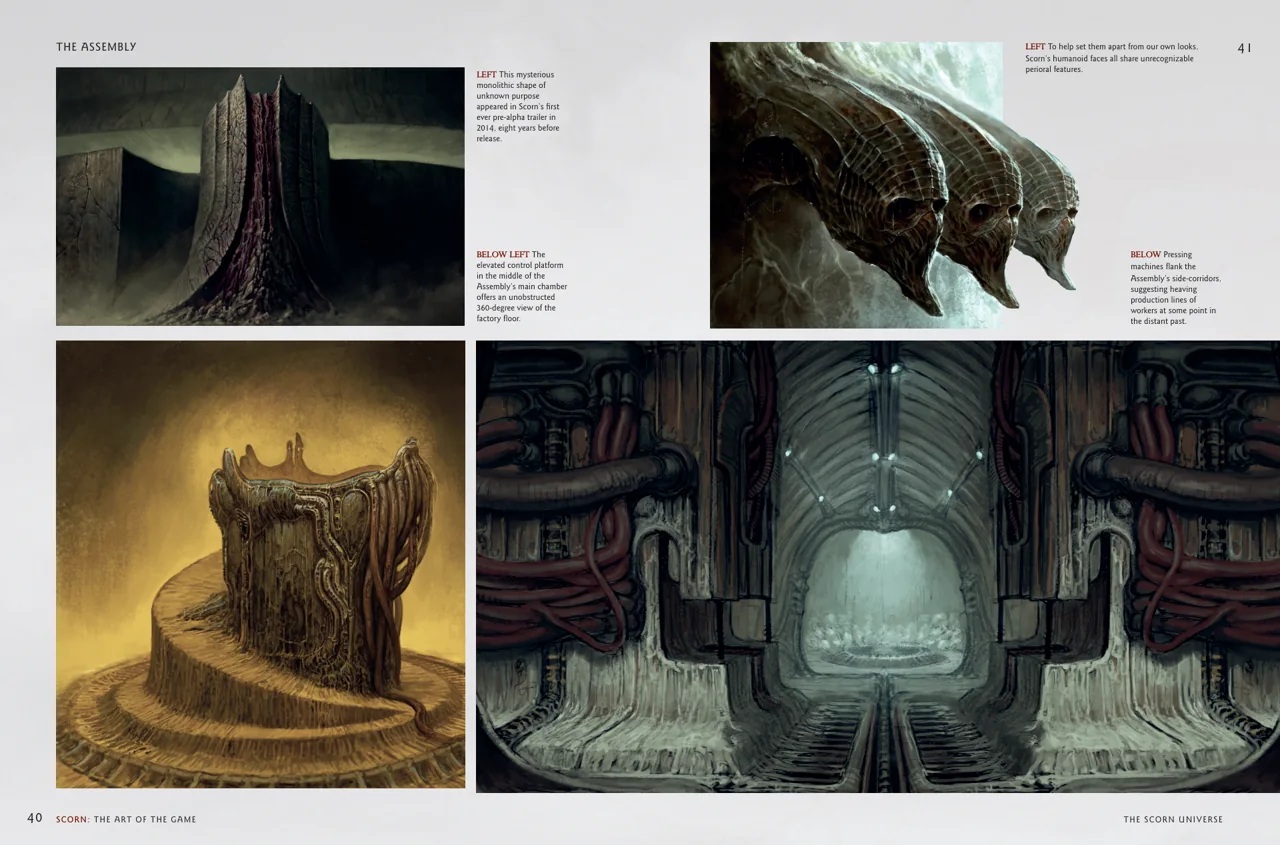
On The Scorn Universe spread, curved supports repeat from the edges towards the centre. Their spacing pulls the eye into depth before converging around a central mass. The dense surface detail sits within a larger, legible structure.
Spread 22–23 · PDF sheet 12
Colour as temperature
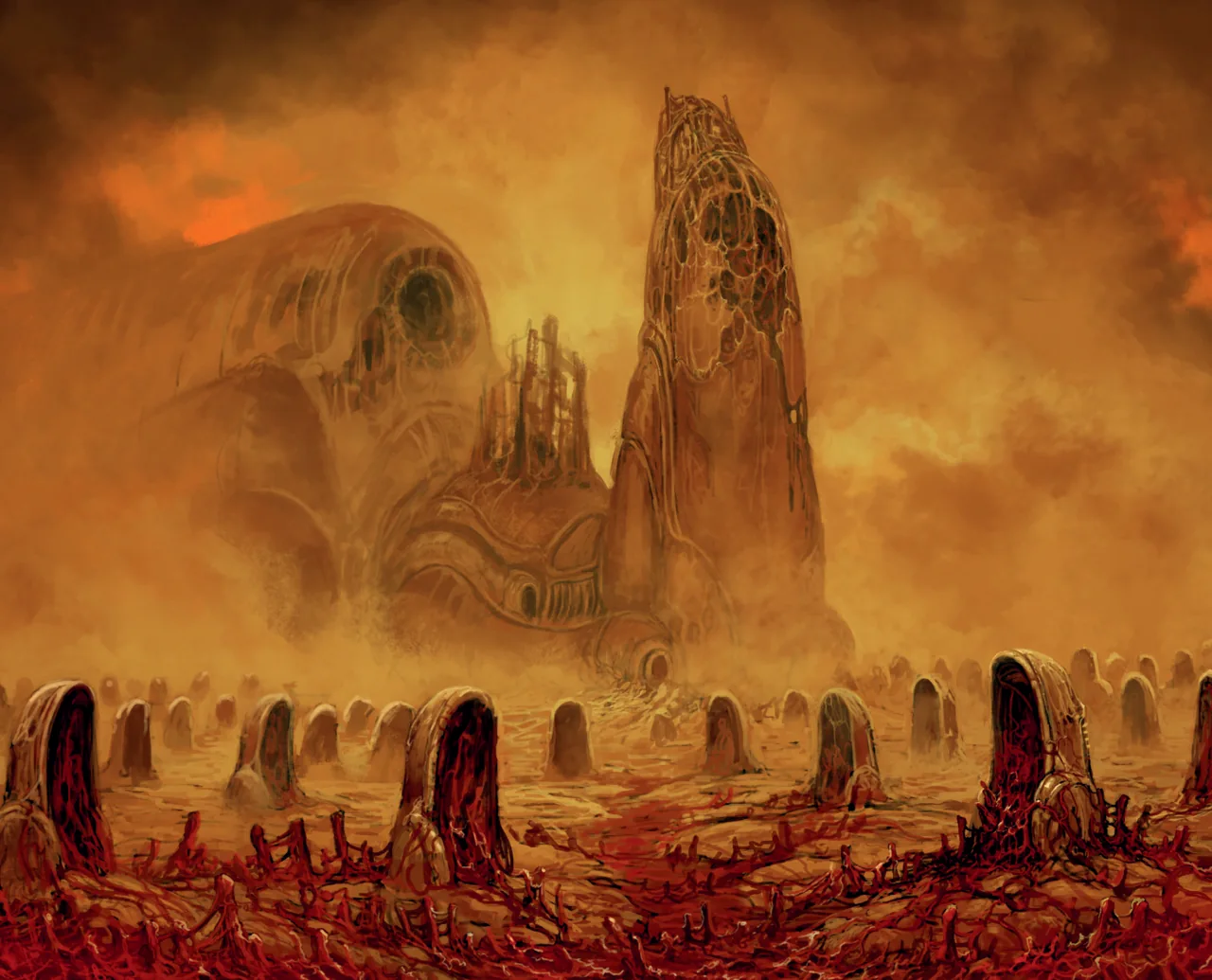
The Field surrounds dark vertical forms with warm ochre. In the selected interior studies, light shifts towards cooler hues. The change alters our sense of the environment before we have identified its individual objects.
The Field · PDF sheet 27; studies · sheet 21
Scale through silhouette
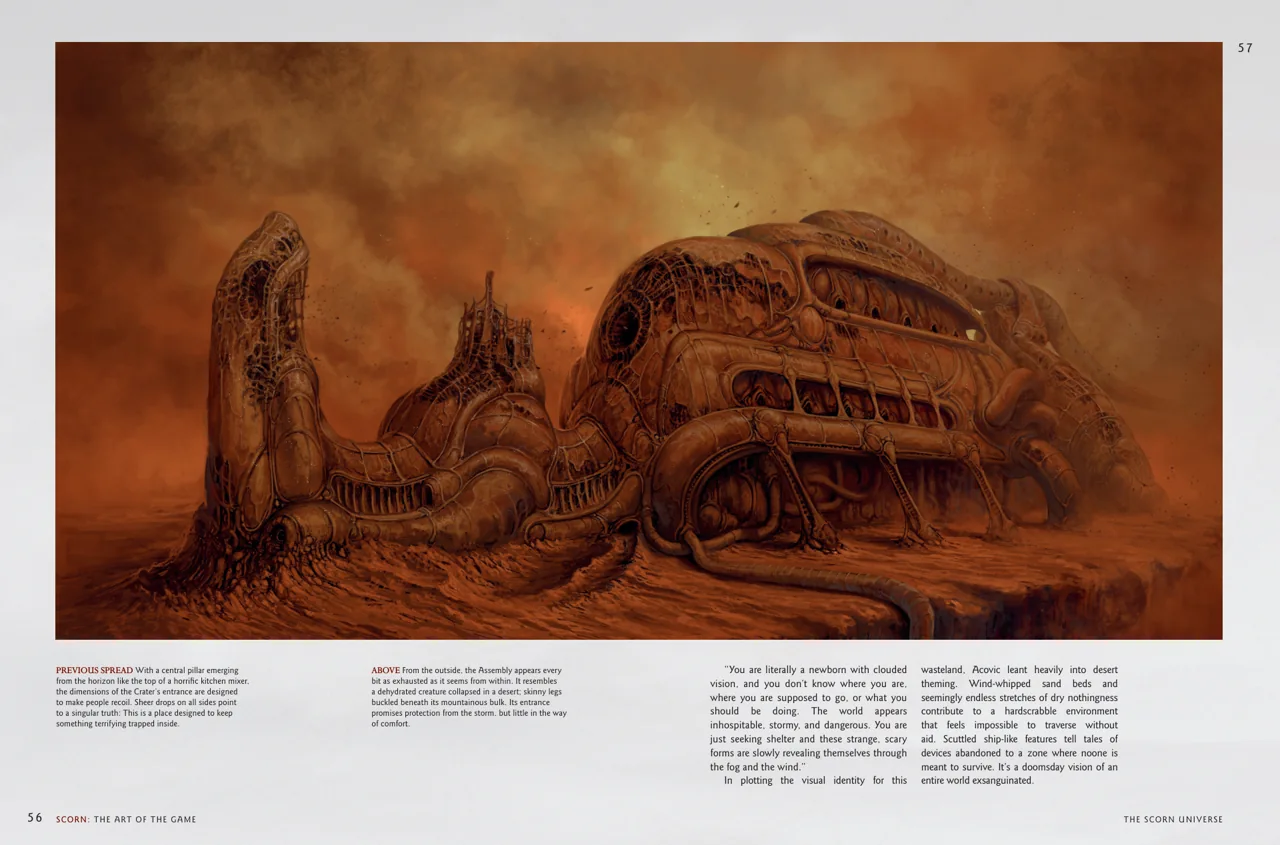
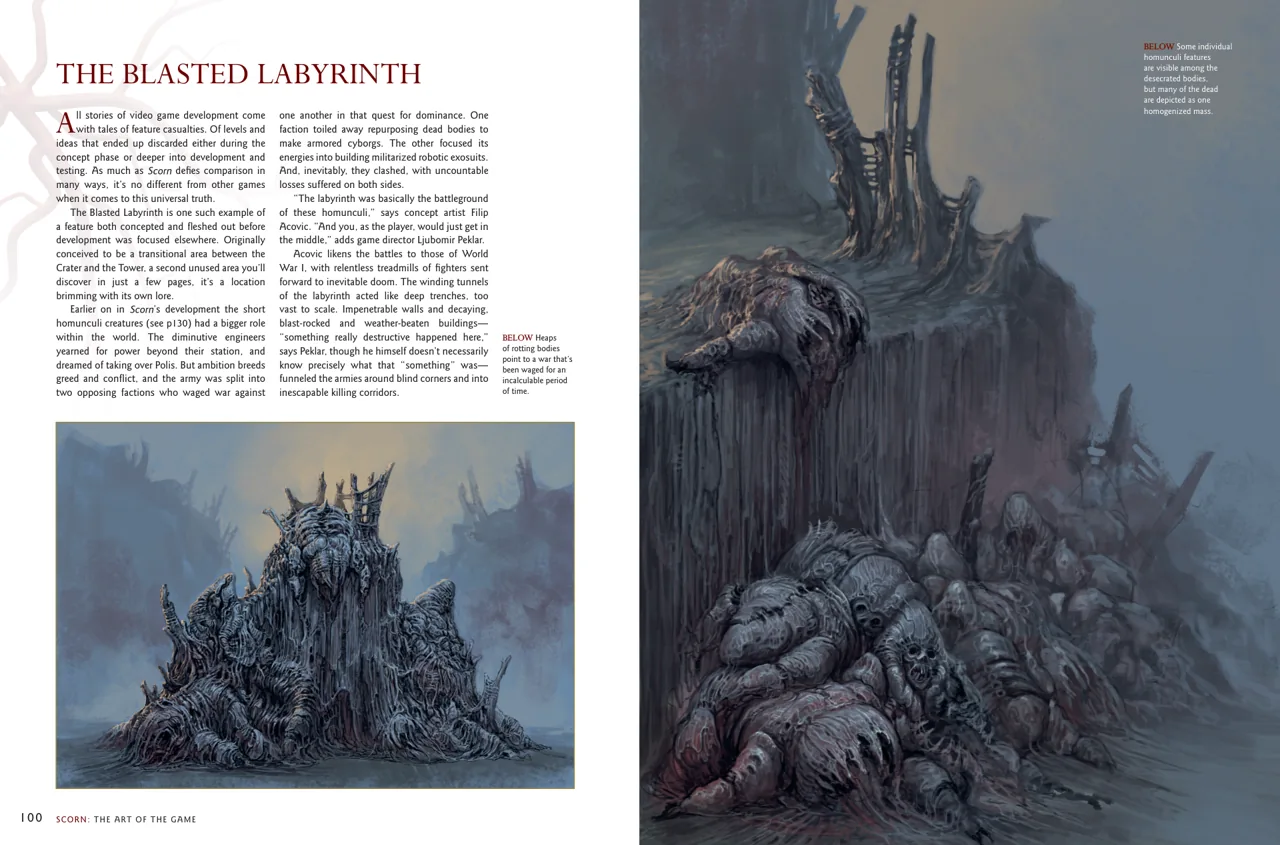
The architectural accumulations of The Blasted Labyrinth first register as large silhouettes. Close viewing reveals their dense texture. Reading mass before surface allows a complex image to hold together at a distance.
The Blasted Labyrinth · PDF sheet 51
For concept artists
Make three small value studies of an original environment. Keep the direction of repeated forms, but change the vanishing point. Compare the resulting sense of movement.
For environment artists
Separate a composition into primary masses, repeated elements and surface texture. Begin your own blockout with the first layer and check the silhouette before adding detail.
For illustrators and students
Extract a limited palette from a spread and apply it to an independent subject. Decide which element carries the atmosphere: hue, contrast or the placement of light.
These are observation exercises proposed by ArtMuse, rather than lessons taken from the book. The publication supports the study of environments and visual development; it is not presented here as a step-by-step modelling course.
What language is the book?
The PDF is in English. Changing the ArtMuse page language does not translate the book.
How many sheets are in the PDF?
The file contains 97 PDF sheets. A sheet can contain a book spread, so this is not necessarily the printed page count.
How can I access the PDF?
Sign in to ArtMuse. An active subscription lets you save an included edition to your library and download it. Saved materials remain available after your subscription ends.
What do the previews show?
Selected pages from the supplied digital copy. Captions identify PDF sheet numbers; the review and study exercise were written by ArtMuse from these images.
Sources
CONTINUE THE COMPOSITION04 / RELATED
A FEW MORE IDEAS